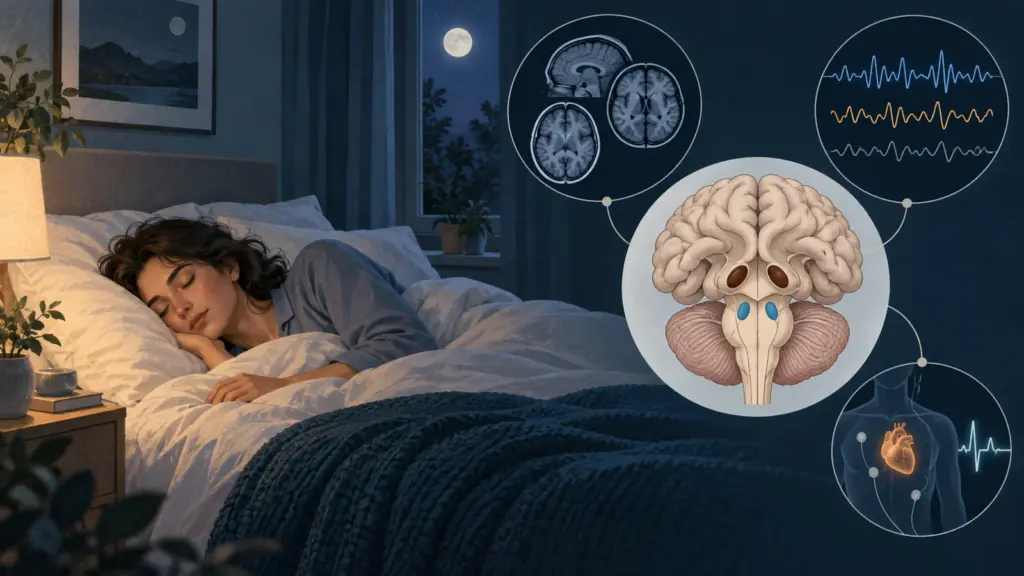
How sleep, brainstem imaging and body signals could clarify early disease
A recruiting observational study pairs 50 people with REM sleep behavior disorder with 50 controls to test brain, sleep, protein and body signals.
See current Track status →
ioQuanta
ioQuanta follows scientific and technological progress over time — what changed, what still blocks it, and what evidence should come next.
Recent progress
Important updates in scientific questions we are already following — and what each one adds to the story.
A recruiting observational study pairs 50 people with REM sleep behavior disorder with 50 controls to test brain, sleep, protein and body signals.
See current Track status →
A 2026 preprint shows how learning-guided search assigns observations across mixed satellites, improving weighted utility in six simulations while energy tradeoffs remain.
See current Track status →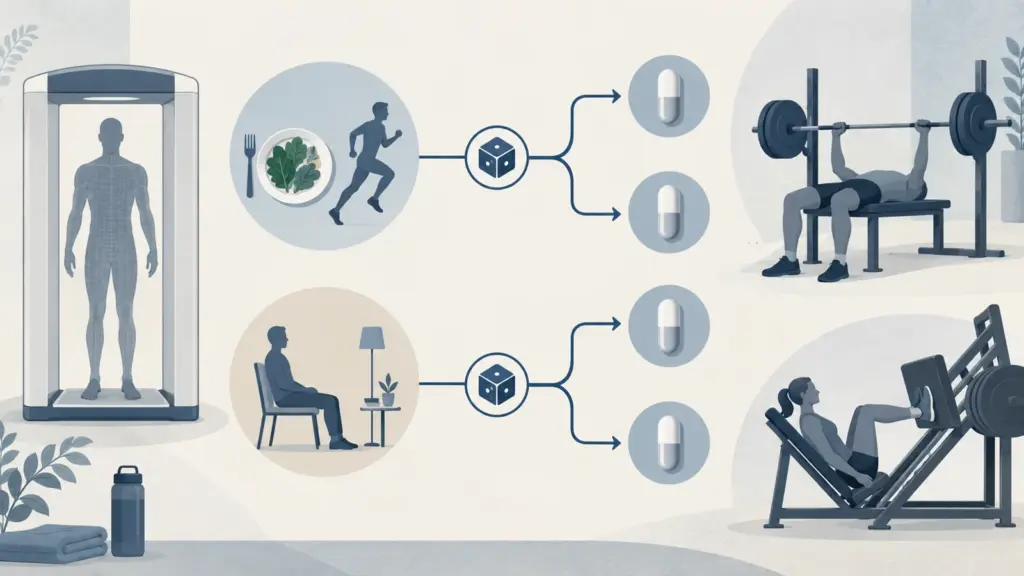
A 12-week trial in adults aged 45–65 found lean-tissue and strength gains with creatine, but mixed memory results. Exercise participation was self-selected.
See current Track status →Long-running questions
Open a Track when you want the current answer, the main bottleneck, and the evidence trail behind it.
Main bottleneck: Current evidence does not establish whether these approaches reliably predict later Parkinson’s diagnoses in people with REM sleep behavior disorder.
See current status →Main bottleneck: Maintaining chemically stable, mechanically intact electrode–electrolyte interfaces during cycling remains the central barrier: reactions, voids, fractures and metal growth can undermine contact and ion transport.
See current status →Main bottleneck: Establishing that bacteria survive within aging concrete and reliably produce durable crack sealing under changing exposure conditions, while preserving the concrete's mechanical performance.
See current status →New findings
Interesting findings that may matter, even when it is too early to know whether they will become part of a longer story.

A randomized human trial compares usual medication with tailored activities and caregiver education; its registry record lists the symptom measure but no posted results.
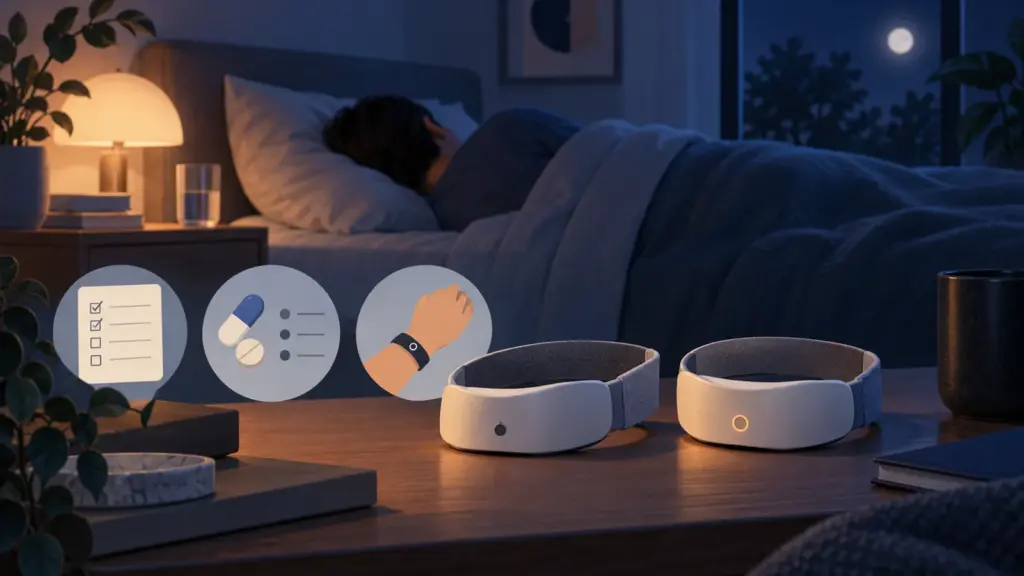
A planned eight-week sham-controlled trial will measure sleep, medication-use frequency and wrist activity; the registry has no posted results.

An Italian diagnostic study screens rehabilitation patients for memory and thinking difficulties, then uses deeper tests and 12-month follow-up to study change.
What could change the picture
The next results that could materially change what we know about these questions.
Follow-up results showing whether imaging or multimodal assessments predict who develops Parkinson’s, with predictive accuracy confirmed in an independent group.
Open Track →Reproducible full-cell tests combining high electrode loading with sustained cycling, supported by measurements showing that interface resistance, contact loss and damaging metal growth remain controlled under clearly reported operating conditions.
Open Track →Controlled, long-term field measurements showing that aged bacterial concrete retains healing activity after cracking and reduces water and ion penetration compared with otherwise equivalent concrete without bacteria.
Open Track →